


Puppet Lord 3D
4.5119.00 Reviews
App Specs
- Version
- 1.0.24
- Updated On
- License
- Free
- Downloads
- 5,000,000+
- Developer
- Yso Corp
- Categories
- Action
- Platform
- Android
Screenshots
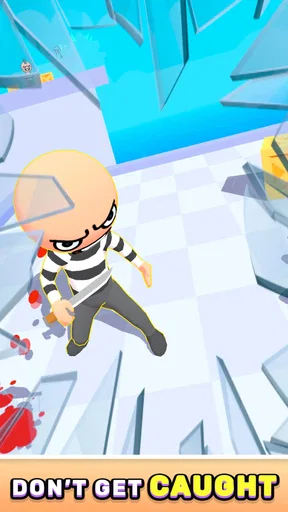
 Analysis by AppCompare
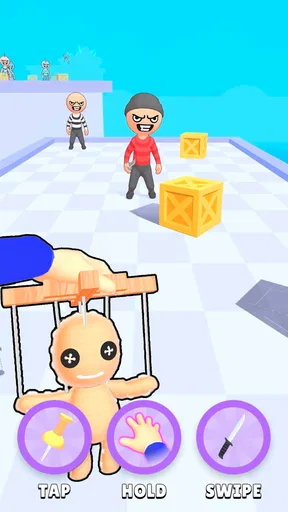
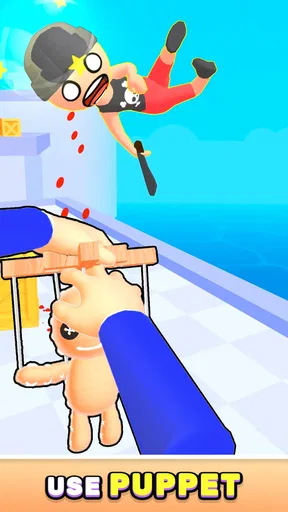
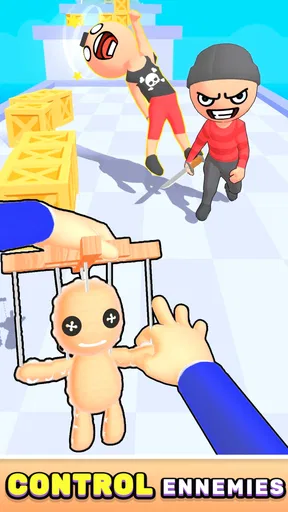
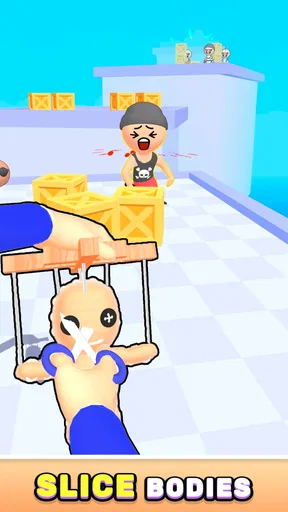
I went into Puppet Lord 3D expecting a quick action game built around a simple joke, but its central idea is more interesting than that. You control a puppet-like doll and use its movements against enemies, turning ordinary combat into a hands-on manipulation challenge. The appeal is not a huge story or a complicated progression system. It is the immediate feeling of making an opponent stumble, collide, or lose control because your actions directly affect the puppet.
That focus makes the game easy to understand within moments. It is a free action title from Yso Corp, aimed at Teen players, and it has already attracted more than five million installs with an average rating of 4.5 from roughly four thousand ratings. Those figures suggest that the basic concept connects with a wide audience, but they do not tell you whether the unusual control style will suit you. After spending time with it, my view is that this is best treated as a short-session physics-flavored action game rather than a deep combat experience.
The current version is 1.0.24, and the game runs on Android 7.0 or later. There are in-app purchases priced at $3.99 per item, so the free entry point is useful for testing the idea before deciding whether you want to spend anything. I would not install it expecting a traditional fighting game, a long campaign, or a carefully balanced competitive system. I would install it when I wanted something tactile, strange, and easy to pick up.
Why manipulating the puppet is the whole point
The defining capability is the way the puppet becomes your tool. Instead of simply tapping an attack button and watching a fixed animation, you interact with a character whose body is the source of the action. That changes the rhythm of play. I am not only choosing whether to attack; I am trying to make the puppet’s movement work in my favor while an enemy is in the way.
This distinction matters because the game’s satisfaction comes from cause and effect. A successful move feels less like selecting a command and more like arranging a small physical trick. The enemy is not just a target with a health bar in the background. It is part of the immediate puzzle: where it is standing, how close it is, and how the puppet’s motion can turn that position into an advantage.
The puppet is both the weapon and the problem to solve. That is the strongest design choice here. It gives the action a playful awkwardness that standard beat-’em-up alternatives usually avoid. In a conventional mobile brawler, I can often rely on repeated taps, automatic targeting, or a familiar combination of attacks. Here, I have to pay more attention to the relationship between my input and the puppet’s body.
That also explains why the game can feel amusing even when the action is not especially complex. The unusual movement creates little moments of surprise. A plan may work differently than expected, or a clumsy-looking motion may produce a better result than a neat one. For me, that unpredictability is more important than any sense of mastery. The game is entertaining because the interaction is unusual, not because it offers a large combat vocabulary.
Worth Reading Before You Choose

EA SPORTS FC Mobile 26 Is a Bigger Football Game, but It Takes Time

Flipboard Shows What News Apps Must Do Beyond the Feed

Switching to Android Auto Means Rethinking Your Driving Routine

Google Calendar Makes a Crowded Week Easier to Manage

Ludo King Makes the Most of the Minutes Between Plans

Baby Panda World Brings Quick Play to Modern Phones, but Its Game Library Feels Busy
What the unusual control style changes
In practical terms, manipulating the puppet makes each encounter feel more immediate than a passive animation-driven attack. I am watching the enemy and thinking about positioning at the same time. That creates a small mental pause before acting, even though the overall game remains quick. The best moments come when I stop treating the puppet like a normal character and start treating it like a movable object that can be directed toward a result.
This is also why the title works well for players who enjoy experimental mobile games. It does not ask me to memorize a long list of abilities. Instead, it asks me to understand one unusual interaction and use it repeatedly in different situations. That is a good trade for a game designed around short bursts of play.
However, the same central idea can become tiring for anyone who wants precise, traditional controls. If you prefer attacks that always respond in exactly the same way, the puppet’s behavior may feel less dependable than a standard action game. The loose, physical quality is part of the charm, but it can also make a failed attempt feel like control friction rather than a mistake I deliberately made.
How I approached the action in practice
My most useful adjustment was to stop rushing. At first, I wanted to move as quickly as I would in a typical mobile action game, but that made the puppet harder to manage. A better approach is to look at the enemy’s position, decide what kind of contact I want, and then make a controlled movement. The game rewards that small change in attitude because the puppet’s manipulation is easier to understand when I give each action a purpose.
I also found it helpful to think in terms of setup and payoff. The setup is getting the puppet into a useful position; the payoff is the contact with the enemy. If I focus only on the final hit, I lose the part of the game that makes it different. The manipulation itself is the main event, so I try to use the space around an opponent rather than simply pushing forward.
That creates a useful tip for new players: do not judge the game during the first few frantic attempts. The controls make more sense when you deliberately repeat one simple action and watch what changes. Try approaching an enemy from a different angle, pause before committing, and notice how much of the result comes from placement rather than speed. This is not a hidden mode or an advanced unlock; it is simply the most effective way I found to understand the core interaction.
Another practical habit is to treat mistakes as information. Because the puppet is the center of the game, an unsuccessful move can show whether I was too close, too aggressive, or poorly aligned. In a conventional action title, a missed attack may disappear into a cooldown or animation. Here, the awkward result is often visible enough to teach me something about the next attempt.
That said, the learning process is not equally satisfying for everyone. Players who enjoy discovering how a system behaves will probably appreciate it. Players who want immediate precision may see the same process as unnecessary experimentation. The game’s controls are therefore not merely a technical detail; they determine whether the experience feels playful or irritating.
A realistic everyday session
I can easily imagine opening this game while waiting for a coffee order, sitting on public transport, or taking a short break between tasks. The concept is understandable without a long explanation, and I do not need to remember a complicated story before starting. I can play for a brief period, focus on the next encounter, and stop without feeling that I have abandoned a large narrative commitment.
That makes it more suitable for fragmented time than a story-heavy action game. If I have only a few minutes, I would rather experiment with one puppet interaction than begin a mission that depends on remembering several objectives. The game’s strange physical premise gives those short sessions a clear identity: I am opening it to manipulate the puppet, not to complete a long checklist.
There is a tradeoff, though. The same simplicity that makes it convenient can reduce its pull during a longer sitting. After the novelty of the manipulation has done its work, I may want more variety than the central idea can provide. This is where expectations matter. I see it as a snack-sized action game, not a replacement for a more substantial mobile combat title.
The best scenario for this kind of action
The strongest use case is a player who enjoys odd, tactile mechanics and wants something immediately different from automatic attacks. If you like watching a simple system produce unexpected results, this game has a clear reason to exist. It is especially appealing when I am in the mood for experimentation rather than competition or narrative immersion.
It also works for people who prefer learning through doing. The puppet’s behavior is easier to appreciate by trying movements than by reading instructions. I can understand the game’s appeal within a short session because the main interaction is visible on screen. That makes it approachable for someone who does not usually spend time with complex action games.
A good scenario is a casual evening when I want a game that feels active but does not demand a major commitment. I can begin with no elaborate preparation, test an approach, and enjoy the result when the manipulation works. The action has enough physical comedy and unpredictability to make a few attempts entertaining even when I am not chasing a perfect performance.
I would be more cautious about recommending it to someone looking for competitive depth. The puppet concept creates a memorable hook, but a hook is not the same thing as a broad combat system. If your ideal action game includes extensive character builds, carefully tuned combos, ranked matches, or a strong story campaign, this is probably not the right destination.
It is also not my first recommendation for younger children because the content rating is Teen. Parents should pay attention to that age guidance rather than assuming that the puppet presentation makes the game automatically suitable for every child. The playful visual idea and the official age category are separate considerations.
Where the tradeoffs become noticeable
The biggest tradeoff is control freedom versus precision. Manipulation gives the game personality, but a physical-feeling interaction can be less predictable than button-based combat. When I succeed, the result feels personal and satisfying. When I fail, I sometimes question whether my timing was wrong or whether the puppet simply responded in a way I did not expect.
That uncertainty is acceptable in a casual action game, but it would be frustrating if I approached every encounter as a test of exact skill. I recommend giving the game room to be loose. If I demand the same crisp response I would expect from a competitive fighting game, I am judging it by the wrong standard.
The second tradeoff is novelty versus long-term variety. The puppet manipulation is specific enough to distinguish the game from ordinary mobile action titles, yet the same focus can make the experience feel narrow once I have understood the basic pleasure. I would rather play it in intervals than assume it will hold my attention for extended sessions every day.
The free price helps with that decision because I can try the central mechanic without paying at the start. The optional purchases cost $3.99 per item, so I would first decide whether the basic manipulation remains enjoyable after the initial surprise. Paying makes more sense only if I already know that the game’s particular style fits my habits; the purchase should not be used to solve a dislike of the core controls.
There is also a comparison issue. Against a conventional mobile brawler, Puppet Lord 3D feels more experimental and less familiar. A standard brawler is usually better when I want clear attack timing and predictable responses. Against a physics-based toy game, this title offers a more direct action goal, but it may not provide the same open-ended freedom I would expect from a pure sandbox. Its position is between those categories, and that middle ground is both its identity and its limitation.
One useful way to choose is to ask what I want from the next ten minutes. If I want reliable progression, a developed narrative, or a precise combat challenge, I should choose another game. If I want to see whether I can turn an awkward puppet movement into an effective attack, this one has a much stronger case.
Who gets the most from it
The best audience is someone who enjoys compact action games with a single unusual mechanic. You do not need to be an expert player, and you do not need to learn a deep ruleset before seeing the appeal. Curiosity is more important than technical skill. If you enjoy testing what happens when you change an angle, delay an action, or approach an enemy differently, the game gives that curiosity something concrete to work with.
I would also recommend it to players who are tired of mobile games that feel interchangeable. Many action titles rely on familiar attack buttons and upgrade loops, while this one leads with the puppet itself. Even if you eventually decide it is too limited for regular play, it is unlikely to feel like a completely generic brawler during the first sessions.
On the other hand, I would tell fans of polished competitive action to skip it unless they are specifically interested in its unusual control idea. The game’s value is not in replacing a serious fighting game. It is in offering a different kind of interaction that is easy to sample and amusing when it works.
Device compatibility is reasonably broad because the listed minimum is Android 7.0, but the more important question is still whether your phone handles the controls comfortably. Since the experience depends on seeing and directing the puppet clearly, a cramped screen or uncomfortable grip could make the manipulation less pleasant. I would try a short session before forming a strong opinion about long-term play.
The developer, Yso Corp, has chosen a concept that is immediately recognizable but not entirely conventional. That is a strength: I know what makes this game different before investing much time. It is also a warning, because there is not much reason to stay if that difference does not appeal to me. The game cannot hide behind a complicated narrative or a large collection of systems; the puppet interaction has to carry the experience.
My final recommendation
I recommend Puppet Lord 3D as a light, unusual action game for short sessions, especially if you enjoy manipulating objects and learning through trial and error. Its best quality is the way it turns the puppet into an active part of combat rather than a decorative character. That gives ordinary encounters a playful physical twist and makes the game easy to distinguish from standard mobile brawlers.
I would keep expectations measured. This is not the game I would choose for a long story, serious competitive play, or highly exact controls. The manipulation can feel imprecise, and the focused concept may lose some impact once the novelty fades. Those are meaningful limitations, not reasons to dismiss it entirely.
For me, the deciding question is simple: do you want a dependable action system, or do you want to experiment with an awkward puppet and see how it affects enemies? If you choose the second option, the free download makes trying it straightforward. Its strongest moments come from the interaction itself, not from a large amount of content around it. That makes it a good casual recommendation for curious players, while giving more demanding action fans a clear reason to look elsewhere.
Pros
- Simple controls make it easy to start playing quickly.
- Short levels suit quick gaming sessions on mobile devices.
- 3D visuals give the puppet-themed world a distinctive style.
- Unlockable content provides a reason to keep progressing.
- Offline play is convenient when you have no internet connection.
Cons
- Gameplay can become repetitive after extended sessions.
- Some levels may feel too easy for experienced players.
- The camera can occasionally make movement and aiming difficult.
- Ads may interrupt the experience
- depending on the version.
- Limited customization reduces long-term variety for some players.
FAQs for Puppet Lord 3D
What is Puppet Lord 3D, and how is the game played?
Puppet Lord 3D is a casual action and adventure game built around controlling a puppet-like character in colorful 3D environments. Players generally guide the character through stages, overcome obstacles, collect useful items, and face enemies or challenges along the way. The controls are designed to be approachable, making it suitable for short play sessions as well as longer progress-focused gaming.
Is Puppet Lord 3D free to download and play?
Puppet Lord 3D can typically be downloaded without an upfront purchase, although the exact availability and monetization may depend on the Android or iOS version. Free games of this type may include advertising, optional in-app purchases, or both. Before installing, check the store listing for current details about purchases, advertisements, supported devices, and any restrictions that could affect your experience.
Does Puppet Lord 3D require an internet connection?
The basic gameplay in Puppet Lord 3D may work without a continuous internet connection, which is convenient when traveling or playing in areas with weak coverage. However, an internet connection can still be required for advertisements, updates, cloud-related features, online events, or restoring purchases. It is best to launch the game once while connected and test which features remain available offline.
Is Puppet Lord 3D suitable for children?
Puppet Lord 3D uses a playful visual style and simple game mechanics, but parents should still review the official age rating before allowing children to download it. Consider whether the game contains advertisements, optional purchases, competitive elements, or links to external pages. Activating parental controls and disabling unauthorized purchases is recommended, particularly if children use a shared Android or iOS device.
What should I check before installing Puppet Lord 3D?
Before downloading Puppet Lord 3D, confirm that your phone or tablet meets the minimum operating-system and hardware requirements shown on the official store page. Also check the available storage space, because 3D games may need additional room for updates and temporary files. Reviewing permissions, privacy information, recent user feedback, and the developer’s update history can help you decide whether the app is suitable for your device.


